
Blocked & Overflowing Gutters: Causes and Fixes
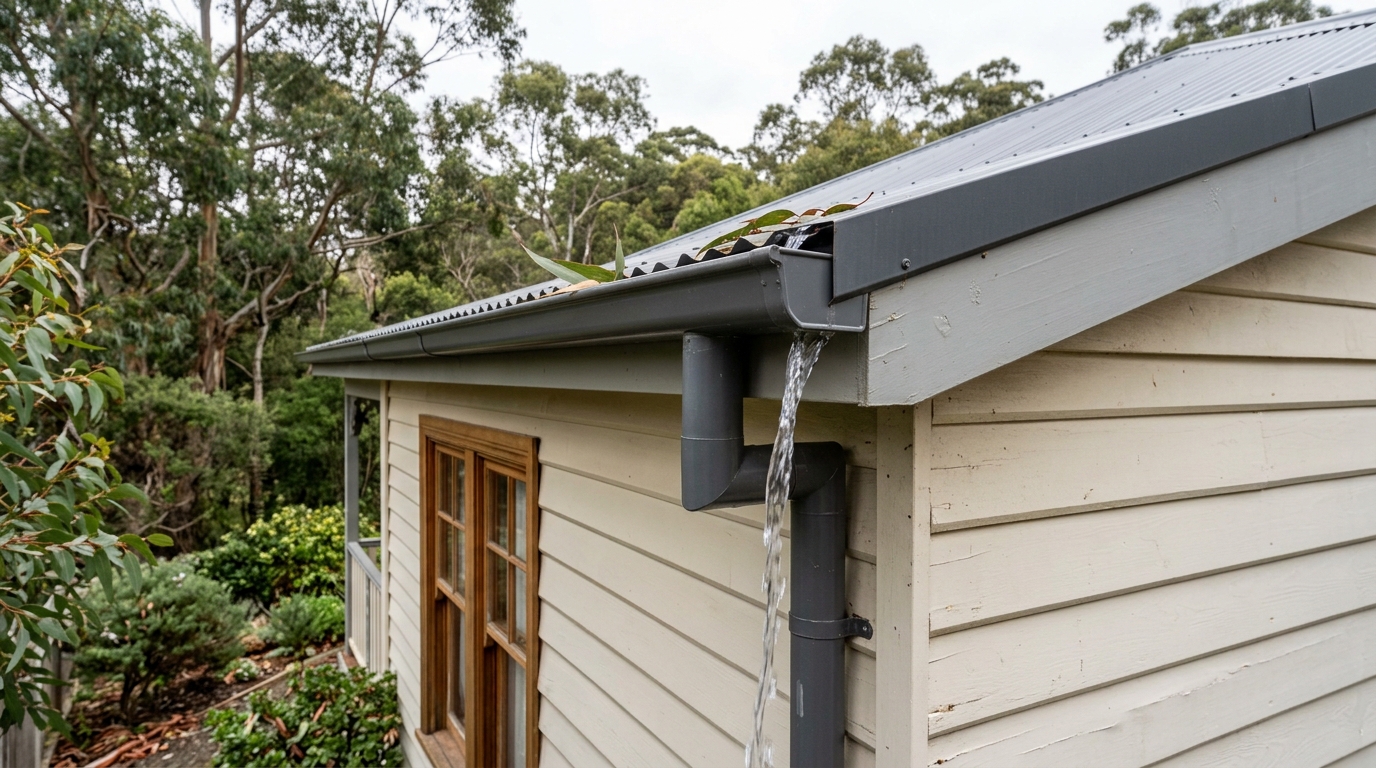
If your gutters spill over the edge every time Hobart gets a decent downpour, they're trying to tell you something. Overflowing gutters aren't just a wet-weather nuisance — they're usually a sign that water isn't draining the way it should.
Left alone, that overflow can work its way into your roof, walls and foundations. The good news is that most causes are easy to understand, and nearly all of them are preventable with a bit of care.
Here's why gutters overflow, the damage a blockage can do, and how to get water flowing freely again before the next big rain.
Why your gutters overflow
An overflowing gutter almost always comes back to one thing: water can't get where it needs to go. Sometimes that's a blockage, sometimes it's the way the gutter sits, and sometimes the gutter simply can't cope with the volume coming off the roof. These are the causes we see most often on Hobart homes.
Blocked gutters and debris
This is by far the most common reason gutters overflow. Gum leaves, twigs, bark, seed pods and windblown grit build up over time until water has nowhere to go and pours over the front edge instead.
Tasmania's tree cover makes this worse than most places. If your home sits under gums or wattles, the gutters fill faster — and a wet winter on top of a full gutter is a recipe for overflow.
A blocked downpipe
Even spotless gutters will overflow if the downpipe below them is choked. Debris tends to wash down and jam at the outlet where the gutter meets the top of the downpipe, forming a plug that backs everything up.
The tell-tale sign is water spilling over near a downpipe rather than along the whole run, often with a gurgling sound as it struggles to drain.
Not enough fall
Gutters need a slight, consistent slope toward the downpipes so water keeps moving. If a section has too little fall — or has sagged over the years so it tips the wrong way — water pools in the low spots and eventually tips over the side.
A quick test: after the rain stops, look for water still sitting in the gutter. Standing water usually means the fall is off.
Sagging or damaged gutters
Years of weight from debris and standing water, a knock from a ladder, or a rough storm can pull gutters loose from the fascia. Once a section sags, it creates a low point where water collects and overflows — and water can start dripping behind the gutter, rotting the fascia board.
Look for gaps between the gutter and the house, loose or missing brackets, cracks, or rust along the seams.
Gutters that are too small
Sometimes the gutters are clean and level but simply undersized for the roof. A large or steep roof area sheds a lot of water fast, and a narrow gutter — or too few downpipes along a long run — can't carry it all during heavy rain.
If your gutters cope with light showers but overflow in every real downpour, capacity is the likely culprit.
The damage overflowing gutters can cause
Gutters exist to steer water away from your home. When they overflow, that water goes exactly where you don't want it, and the repairs cost far more than a clean ever would.
Water pooling around the base of the house can seep in and undermine your foundations. Overflow can also back up under roof edges and tiles, leading to leaks that stain ceilings and soak insulation.
Constant moisture down the walls encourages mould and mildew, rots timber fascia and eaves, and lifts paint. Puddles near the house erode garden beds and draw in pests. None of it happens overnight — which is exactly why overflow is so easy to ignore until the bill arrives.
Signs to watch for
You don't need to wait for a storm to catch a problem early. Keep an eye out for water sheeting over the gutter edge during rain, and for dark stains or streaks down your exterior walls.
Other warning signs include gutters visibly sagging or pulling away from the roofline, plants or grass sprouting from the gutter, pooling water and eroded soil below, and peeling paint or damp patches on the fascia. Any one of these is worth a closer look.
How to fix an overflowing gutter
Start with the simplest cause and work up. Clearing debris solves most overflow problems on its own — scoop out the leaves and gunk, then flush the gutter with a hose to check the water runs cleanly through to the downpipe.
If the gutter is clear but a downpipe is blocked, running a hose down from the top will often shift the plug. Where water pools in one spot, the fall or a sagging bracket is usually the issue and the section may need resetting or re-securing.
If everything is clean and level and the gutters still overflow in heavy rain, the system may be undersized — a case for larger gutters, an extra downpipe, or seamless gutters that resist blockages. Working at height on a ladder is risky, though, so anything beyond a straightforward ground-level check is best left to a professional. If you'd rather skip the ladder altogether, you can book a free quote with our Hobart team and have it sorted safely.
Preventing overflow: cleaning and gutter guards
The single best defence against overflow is regular cleaning. For most Hobart homes that means clearing the gutters at least twice a year, and more often if you're surrounded by gums that drop leaves and bark year-round.
Timing matters here too. A clean heading into winter keeps water flowing through the wettest months, and clearing leaf litter before summer is smart bushfire preparation — dry debris in a gutter is an easy target for embers.
Gutter guard is the other big preventative. A good mesh guard keeps most leaves and debris out in the first place, cuts how often you need to get up there, and helps water keep moving during downpours. It isn't completely maintenance-free, but for leafy Tasmanian blocks it makes a real difference.
When to call a professional
Some overflow is a quick DIY fix. But if your gutters keep spilling over after a clean, if you can see sagging or damage, or if you've spotted signs of water getting into the roof or walls, it's time to bring in a professional.
A licensed gutter specialist can safely inspect the whole system, find blockages and slope problems you'd miss from the ground, and check for early water damage to fascia and roof. Just as importantly, they've got the gear and training to work at height safely — well worth it when the alternative is balancing on a ladder in Tasmanian weather.
At JK Gutter Cleaning we clear, vacuum and check gutters right across Hobart and the surrounding suburbs. If yours are overflowing, get in touch for a free, no-obligation quote and we'll get the water flowing where it should.
Frequently asked questions
Why do my gutters overflow even when they're clean?
Clean gutters can still overflow if a downpipe is blocked, the fall is too flat, or the gutters are simply too small for your roof. If clearing the debris doesn't fix it, one of those is usually the reason — and each is worth checking before the next heavy rain.
How often should I clean my gutters in Hobart?
At least twice a year is a good baseline. Homes under gum trees or with heavy tree cover often need it more often, because Tasmania's leaf litter and wet winters fill gutters quickly. A clean before winter and again before summer covers both the wet season and bushfire season.
Is it normal for gutters to overflow in heavy rain?
It's common, but it's not normal — it points to an underlying issue. Occasional dripping in an intense downpour can happen, but water sheeting over the edge usually means a blockage, poor fall, or undersized gutters that need attention.
Do gutter guards stop gutters overflowing?
They help a lot. A quality mesh guard keeps most leaves and debris out, so gutters stay clearer and water keeps flowing. They don't remove the need for the occasional check, but they cut down blockages and make overflow far less likely.
Need your gutters sorted in Hobart?
Book a fast, obligation-free quote with your local team.