
Do Gutter Guards Actually Work? Pros & Cons
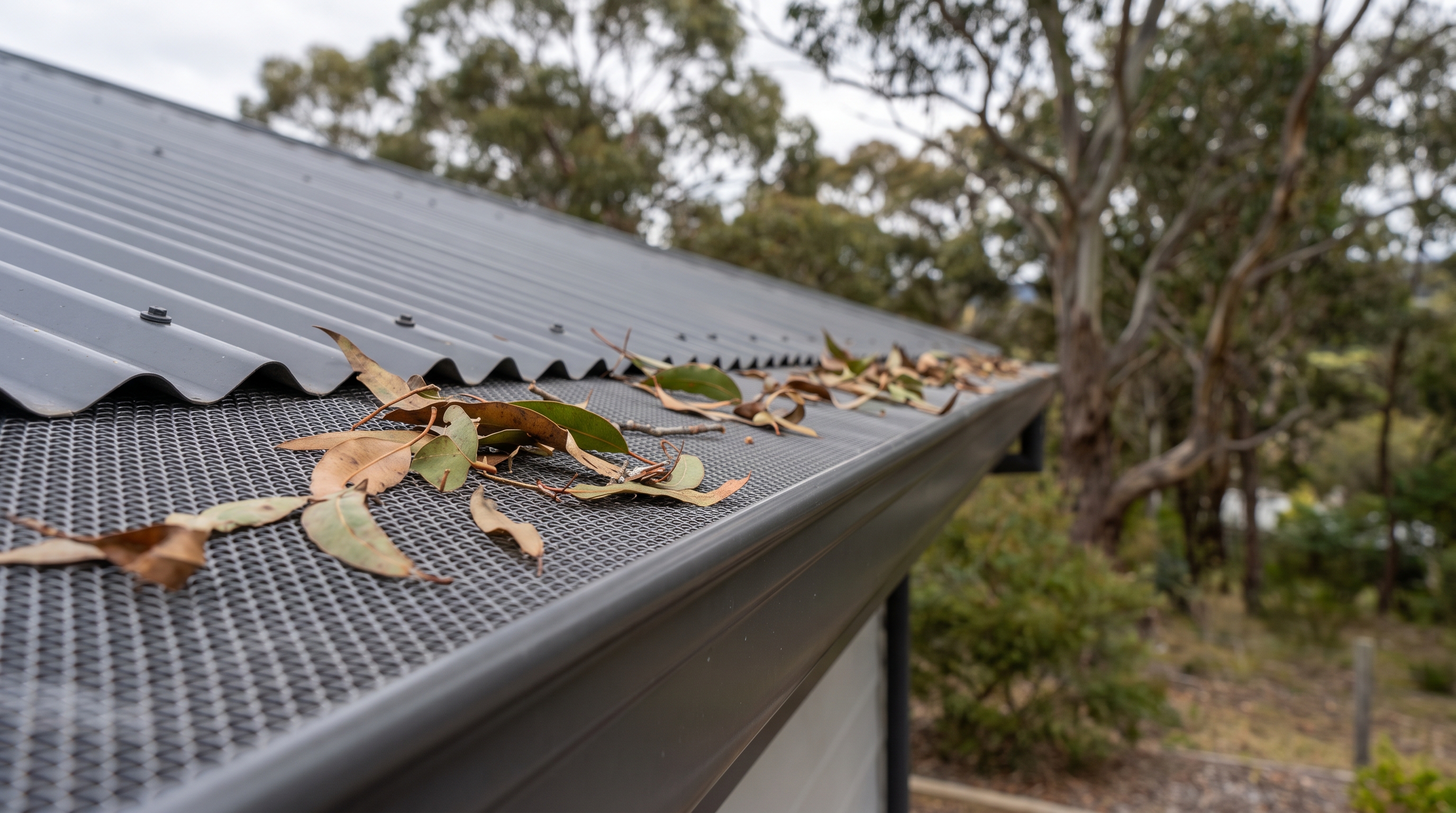
If you're tired of hauling a ladder out every autumn to scoop handfuls of wet gum leaves from your gutters, you've probably wondered whether gutter guards are the answer. The marketing promises are big — "never clean your gutters again." The reality is a little more honest than that.
This is a straight look at whether gutter guards actually work, where they genuinely help, and where they fall short, so you can decide if they're worth it for your Hobart home.
Do gutter guards actually work? The short answer
Yes — a good gutter guard works. But not all gutter guards are equal, and that distinction matters more than anything else on this page.
A quality mesh system, properly installed, will dramatically cut how often your gutters need clearing while keeping leaves, twigs and pests out. Cheap plastic covers and foam inserts, on the other hand, often fail within a season or two and can leave your gutters worse off than before.
The honest truth is that no guard is completely maintenance-free. The difference between one that protects your home for years and one that causes problems comes down to the product you choose and how well it's fitted.
How gutter guards work
A gutter guard is simply a barrier that sits over or inside your gutter. It lets rainwater flow through while blocking leaves, twigs and debris from settling and clogging the channel.
Most systems act like a filter. Rain passes through the mesh or gaps and drains away down your downpipes, while debris stays on top where wind and gravity can carry much of it off the roof.
The best-performing guards are made from powder-coated aluminium or steel mesh, custom-fitted to the roof line. This gives full coverage, a clean finish and a strong hold that stands up to weather — which is exactly what you need in Hobart.
The main types of gutter guard
Not every guard is built the same way, and each type has trade-offs worth knowing before you buy.
Mesh and micro-mesh systems are the gold standard. Made from aluminium or steel with small apertures, they block fine and coarse debris, resist corrosion and can be matched to your roof colour. They cost more, but they last.
Foam inserts sit inside the gutter and are cheap and easy to fit. Unfortunately they break down in the sun, trap seeds that sprout, and can become a fire hazard — a poor choice for Tasmanian conditions.
Brush guards (the bristly "hedgehog" type) slot straight into the gutter. They catch large leaves but let plenty of fine debris through, and some actually trap more than they block.
Plastic screens and covers are the budget option. The perforated holes often can't cope with heavy rain, so water sheets straight off the top, and the plastic warps and fades over time.
Reverse-curve guards use surface tension to guide water in while shedding leaves. They can work well but are more visible and aren't suited to bushfire protection or rainwater harvesting.
For most Hobart homes, a professionally installed aluminium or steel mesh is the option that actually delivers on the promise.
The real benefits
When you get the right system, the upsides are genuine.
You'll spend far less time on gutter cleaning. A good guard won't make your gutters completely self-sufficient, but it turns a twice-a-year chore into an occasional inspection.
It protects your home from water damage. Blocked gutters overflow, and that water can rot fascia boards, stain walls and pool around your foundations. Keeping the channel clear keeps the water where it belongs.
It keeps pests out. Mesh guards stop birds, possums and rodents nesting in your gutters and getting into the roof space.
It adds a layer of bushfire protection. During ember attacks, leaf litter in open gutters is a real ignition risk. Non-combustible mesh with a fine aperture helps keep embers out.
It also helps if you collect rainwater, keeping tanks cleaner, and it means fewer trips up a ladder — and gutter cleaning falls are one of the more common home-maintenance injuries.
The honest downsides
A good article on pros and cons has to give you the cons, so here they are.
No gutter guard is truly maintenance-free. Fine silt, pollen and dust still settle on top of the mesh, so an occasional flush or inspection is part of the deal.
There's an upfront cost. A quality professional system is a bigger investment than a cheap DIY kit, though it usually pays for itself over a few years of skipped cleaning bills and avoided water damage.
Quality varies enormously. This is the biggest risk. A poorly chosen or badly fitted guard can cause water to overflow, trap debris on top, or lift in strong winds — leaving you worse off than an open gutter.
The lesson isn't "avoid gutter guards." It's "choose carefully and get them fitted properly."
Do gutter guards work in Tasmanian conditions?
This is where a Hobart home is different from one on the mainland, and it's worth thinking about before you buy.
Our gum trees are the main culprit. Eucalypts drop fine leaves, stringy bark and seed capsules almost year-round, and in spring, wattle flowers add a layer of fine debris that slips straight through cheap guards. A fine-aperture mesh handles this far better than a coarse screen or brush.
Wet Hobart winters put water volume to the test. During heavy, sustained rain, a good mesh lets water flow freely, while poorly designed plastic covers can send it sheeting over the edge. Choosing a guard rated for genuine rainfall matters here.
Bushfire season is the other consideration. If you're in or near a bushfire-prone area, homes are built to the Australian Standard AS3959, and ember guards use non-combustible mesh with an aperture of 2mm or less to keep burning embers out of the gutter.
If you live in a coastal suburb, salt air can corrode some metals, so the right material choice — a quality poly or marine-grade mesh — helps the guard last.
What do gutter guards cost?
The honest answer is that it depends on your home, and we won't quote a figure we haven't measured.
Cost comes down to your roof size, pitch, gutter length, access, the mesh you choose and any extras like ember-rated mesh. A cheap DIY kit is tempting on price, but a poor fit can void roof warranties and often needs replacing sooner.
The better way to think about it is value over time. Weigh the upfront cost against years of gutter-cleaning call-outs and the potentially far larger bill from water damage or a roof repair. For most homeowners, a quality guard that lasts is money well spent.
The simplest way to get a real number is to have someone look at your roof. You can request a free quote for gutter guard installation and get advice tailored to your home rather than a guess.
How to choose the right gutter guard
If you take one thing from this article, make it this: the product and the installation matter more than the brand on the box.
Match the mesh to your debris. Fine 2mm mesh suits the fine gum leaves and wattle common around Hobart, while larger apertures handle bigger leaves elsewhere.
Match the material to your environment. Powder-coated aluminium and steel are durable and fire-resistant; poly mesh often suits coastal homes better.
And insist on proper installation. Even the best mesh underperforms if it's clipped on loosely or fitted to the wrong roof profile. Fitting it under the roof line, secured correctly for your roof type, is what gives you the long-term result.
The verdict
So, do gutter guards work? Yes — when you choose a quality system and have it installed properly. Skip the cheap plastic and foam, and you'll get a genuine reduction in cleaning, real protection for your home, and fewer trips up the ladder.
If you're weighing it up for your Hobart home, the friendly local team at JK Gutter Cleaning is happy to take a look and give you honest advice — no hard sell. Get in touch for a free quote and we'll recommend what's actually right for your roof.
Frequently asked questions
What are the downsides of gutter guards? The main downsides are the upfront cost, the fact that fine debris still needs an occasional clean, and the big variation in quality — a cheap or badly fitted guard can cause overflow and trap debris on top.
Are gutter guards worth it in Australia? For most homes with nearby trees, a quality guard is worth it. It cuts cleaning frequency, protects against water damage and pests, and adds bushfire ember protection in at-risk areas.
Do gutter guards work in heavy rain? A well-designed mesh guard lets water flow through freely even in heavy rain. Cheap plastic covers with small holes are the ones that tend to overflow, which is why product choice matters for wet Hobart winters.
Will I still need to clean my gutters? Far less often, but yes. Expect an occasional inspection and flush to clear fine silt and pollen rather than the regular full clean-outs an unguarded gutter needs.
What's the best gutter guard for a Hobart home? A professionally installed, fine-aperture aluminium or steel mesh generally performs best against local gum leaves, wet winters and bushfire embers — with material chosen to suit your specific location.
Need your gutters sorted in Hobart?
Book a fast, obligation-free quote with your local team.